We are painters

Lesson 1 (Warmer). What is an artist? Brainstorming, kids have to debate and think what an artist for them is (Driving Question).
Lesson 1. (Activity 1). International
Lesson 1. (Activity 2). Museum Guide. Each group chooses one of the previous types of painting, recreate one of the pictures (art class), look for information (about the paint and painter) and expose it next to the painting.

Lesson 1 (Conclusion). Tourists Questions. Classroom divided in artists and tourists. Tourists ask questions to the artists; they should make them out.
Lesson 2 (Warmer). How many fruits can you see? Teacher projects a picture of Arcimboldo where it appears lots of fruits, groups have five minutes to write as many fruits as they can see. The group who writes the highest number of fruits (the correct ones) get points for Class Dojo.

Learners
have a template where it appears all the steps, they must follow to recreate
ones of Arcimboldo’s paints, teacher provides them some supermarket magazines
in order to do this activity.

Lesson 2 (Conclusion). Famous quotes. Children write their favourite painter quote on their notebook and explain in one or two sentences why they have chosen that one. Sentences are displayed on the electronic board.

Lesson 3 (Warmer). Guess the author. Teacher projects some Van Gogh’s painters and they try to guess the author, they cannot check on internet, points for the winner group (Class Dojo).
Lesson 3 (Activity 1). The Starry Night. In pairs, analyse the picture and answer some questions, then, describe the painting by using ten adjectives.

Lesson 3 (Activity 2). eTwinning project. Teacher explains that Van Gogh wrote letters to his brother explaining his paintings, in pairs, write a post card for their Irish classmates describing the scene.

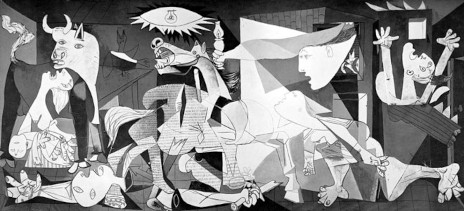
Lesson 3 (Conclusion). One thing you have learned. Learners write on their notebooks one thing they have learned about Van Gogh and another about Picasso.
Lesson 4 (Warmer). Draw a Picasso. In pairs, students use the following website to create their own Picasso.
Lesson 4. Picasso Biography. (Activity 1). Pre-listening. Learners guess the author of the listening by reading five specific words. Whole Class.
Lesson 4 (Activity 2). Listening. Learners listen to this audio twice (the language assistant records Picasso Biography).
Lesson 4 (Acitivty 3). Post-Listening. Groupwork, (five groups, five members per group), learners answer some questions related to the listening, if they need more help, they can use the transcript.

TRANSCRIPT
Lesson 4 (Conclusion). Analysing
Picasso's quote.
“I'd like to live as a poor man with lots of
money.”
Lesson 5 (Warmer). She Sells Seashells by the Seashore. Practice this sound/ʃ/, students try to say this tongue twister.
She Sells Seashells by the Seashore
She
sells seashells by the seashore,
The shells she sells are seashells, I'm sure.
So if she sells seashells on the seashore,
Then I'm sure she sells seashore shells.
Lesson 5. Fishing Boats, Calm Sea. (Activity 1). Pre-reading. Use one word to define Monet’s painting. Whole Class.
Lesson 5. (Activity 2). Reading. Read the story about Monet and his fascination with boats.
Lesson 5 (Activity 3). Post-reading. Every group writes two questions about the reading. Teacher creates a Socrative Quiz using their questions.

Lesson 5 (Conclusion. One truth/ two lies. In groups, learners say two truth and two lies about Monet and the rest of learners must guess the truth and the lie.
Lesson 6 (Warmer). Grammar Competition.
Lesson 6 (Activity 1). Ball questions. Teacher passes the ball to a student and this
one answers the previous question; this pupil should pass the ball and realise
the same question to another classmate.
Lesson 6. (Activity 2). Cards Game. In groups, learners have two different pack of cards, practice the previous question and the reply.
Lesson 6 (Activity 3). Board Game. Groups, practice the structure.
Lesson 7 (Warmer). Frida Khalo. Listen to this story.
Frida Kahlo grew up in a
house called La Casa Azul with her parents and six sisters. That house is now
the Frida Kahlo museum. As a child, Frida loved to draw. At age 6, she
caught a disease called polio which damaged her right leg.
Initially studying
medicine, Kahlo changed her career path because of a serious accident.
Frida often painted portraits of herself. She wanted to show people about her
suffering, her inability to have children, and the people in her life.
Frida was inspired by
traditional Mexican art which is full of feathers, flowers, dancing, music, and
texture.
Frida’s work has inspired
artists to reveal their emotions. Her paintings are often shocking in the way
they show pain and the harsh lives of women.
Today, people visit her
home in Mexico to see where her great art was created and to appreciate what a
single person can accomplish against all the odds.
Lesson 7 (Activity 1). Speaking Record Time Project. In groups of five, teacher prepares questions about painters and the grammar learned in the previous lesson. Groups have ten cards; they can use them against another team. The group that has been talking in English the most will get more clues to discover the hidden character.

Lesson 8 (Warmer). Invitation. Students create an invitation to hand out to people they want to invite to our Museum Day.
Lesson 8 Final Task: Museum Day. Searching. Using the information and the paintings of the Lesson 1. Learners should play different roles (two museum guides, one museum visitor and two critics). In groups, elaborate the information, the questions and the art critic, template is provided. Parents can assist as audience.
These are the groups and the painters each one of them must prepare:
Group
1: Picasso.
Group
2:Van Gogh.
Group
3:Frida Kahlo.
Group
4:Arcimboldo.
Group
5: Leornardo Da Vinci
HACER TEMPLATE
Lesson 8 (Conclusion). Signature. As artists, students ensure everybody gets their signs.

No hay comentarios:
Publicar un comentario